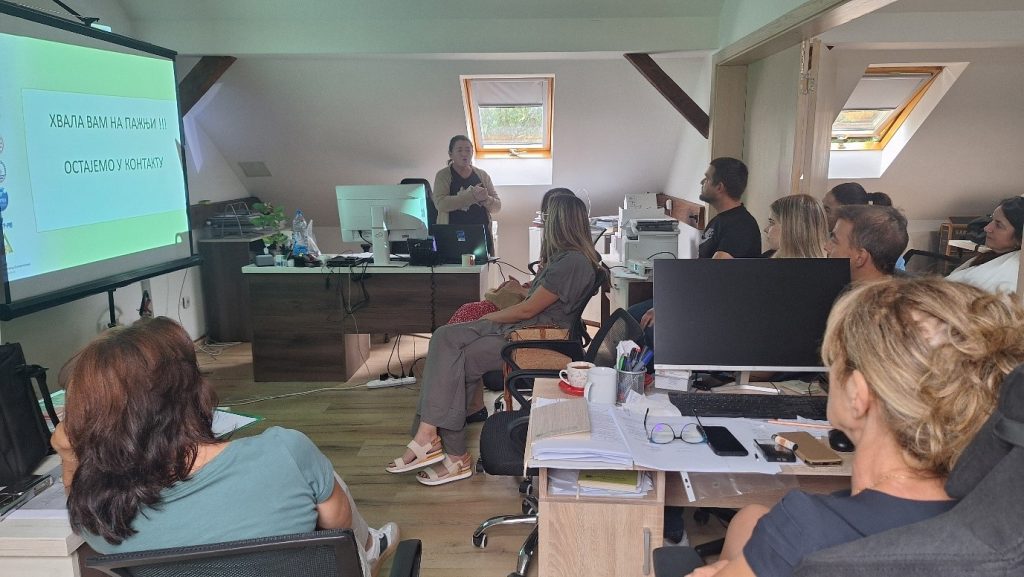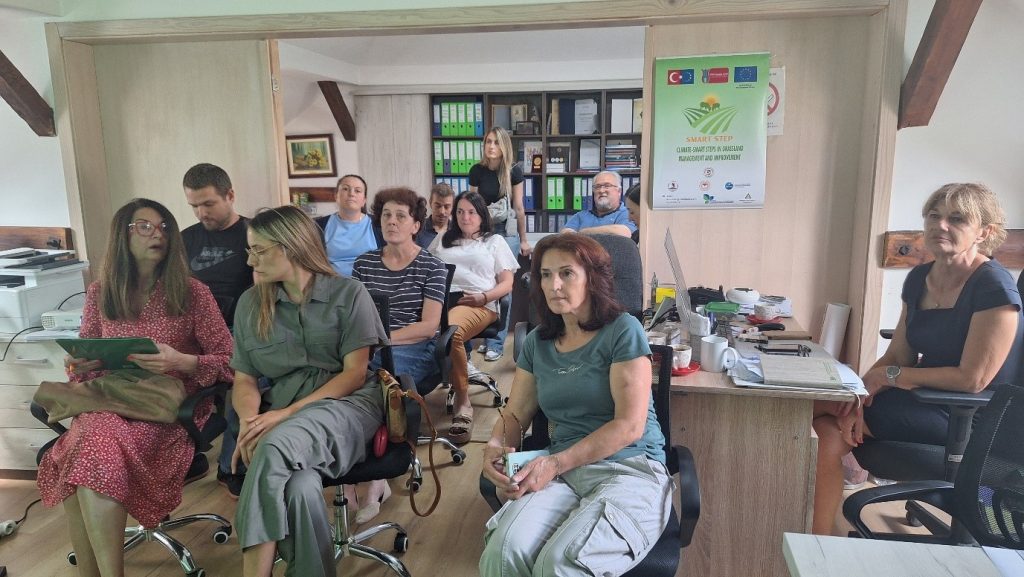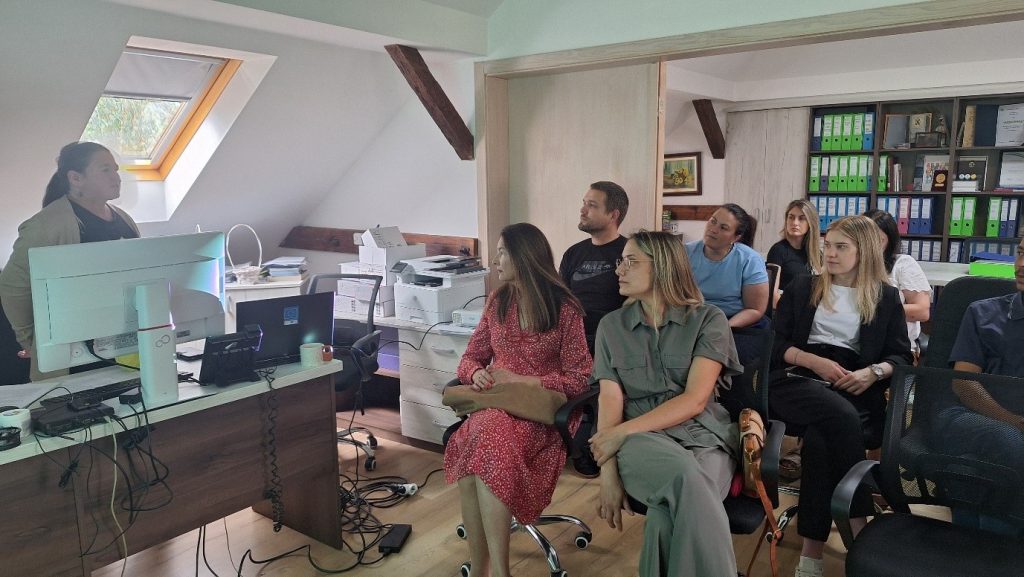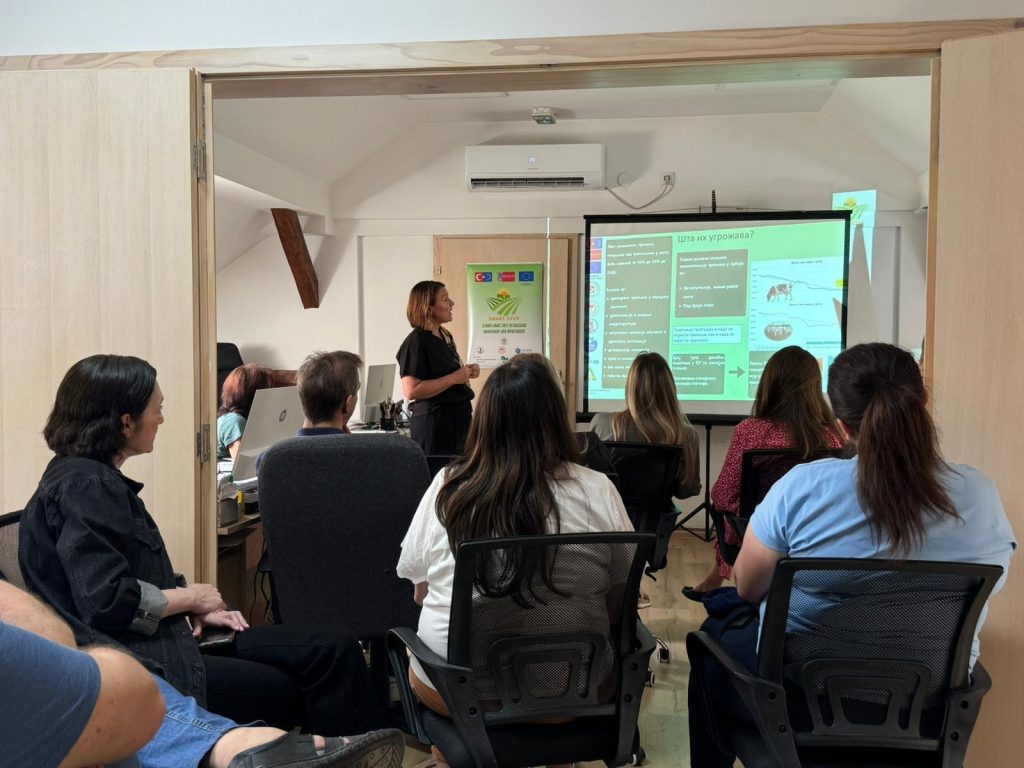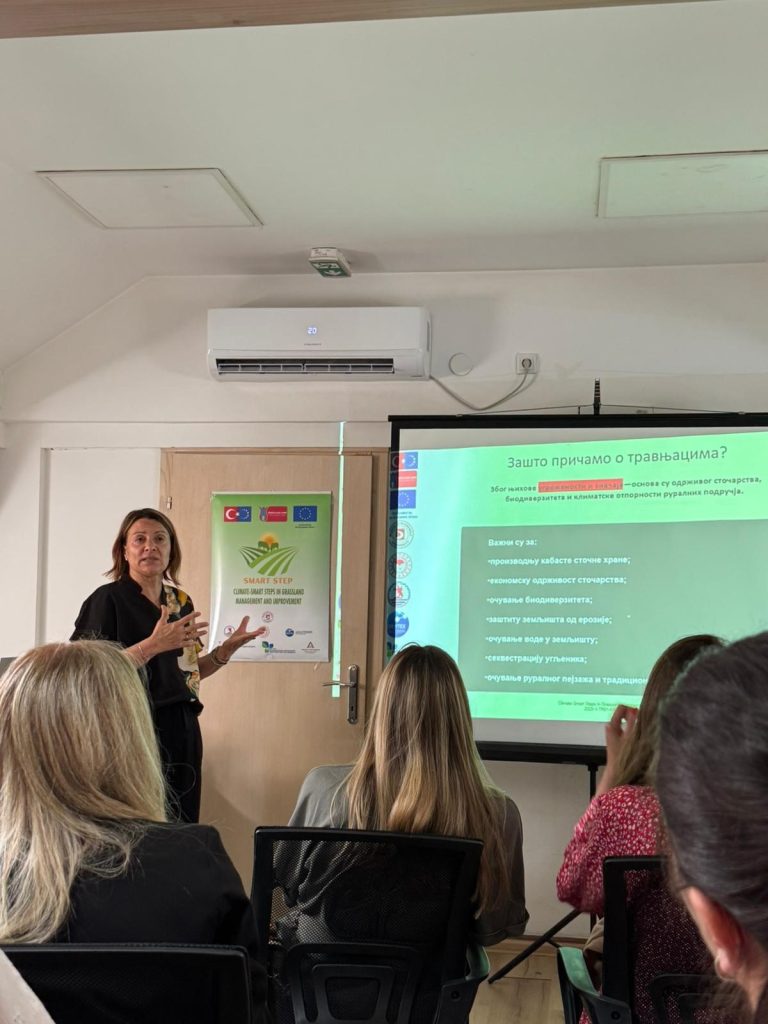
On June 11, 2026, a presentation entitled “Semi-Natural Grasslands in Serbia and the SMART STEP Project – Climate-Smart Steps in Grassland Management and Improvement” was held at the Agricultural Advisory and Professional Service Čačak (PSSS Čačak).
Dr. Dušica Ostojić Andrić and Dr. Violeta Mandić, Principal Research Fellows at the Institute for Animal Husbandry, presented the Erasmus+ project SMART STEP (Climate-Smart Steps in Grassland Management and Improvement) to the experts of PSSS Čačak. They introduced the project’s activities, objectives, and achievements to date, while highlighting the importance of semi-natural grasslands for the sustainable development of livestock production, biodiversity conservation, and adaptation to climate change. Particular attention was paid to the challenges affecting grasslands due to rural depopulation, a decline in livestock populations, changes in land-use patterns, and the growing impacts of climate change.
Considering that PSSS Čačak operates in the region of Western Serbia, which together with Central Serbia encompasses the largest grassland areas in the country, it was particularly important to familiarize agricultural advisors and experts with the current status of these ecosystems, their potential, and opportunities for sustainable management. The role of advisory services in transferring knowledge to farmers is crucial for the conservation and improvement of grasslands, as well as for strengthening the resilience of livestock production to climate-related challenges.
The participants were introduced to the international partnership bringing together institutions from Türkiye, Austria, Spain, Poland, and Serbia, as well as to the planned project outputs, including educational modules on climate-smart grassland management, an online training platform for experts, video podcast materials, and other educational resources that will be made available to the wider professional community.
The presentation concluded with a discussion during which participants exchanged experiences regarding the condition of grasslands in the region, the challenges faced by agricultural producers, and the possibilities for implementing modern approaches to grassland management. It was concluded that the conservation and improvement of semi-natural grasslands represent an important prerequisite for sustainable livestock production, the preservation of natural resources, and the development of rural areas in Serbia.